We live in an era of unprecedented speed. Today, a young photographer or graphic designer can log onto platforms like Canva, Wix, or AI-driven website builders and launch a sleek, ready-to-use portfolio in less than fifteen minutes. With a few clicks, pre-designed templates, automated color palettes, and stock assets transform a blank canvas into a seemingly high-end digital storefront.
On the surface, this feels like an incredible advantage. The barrier to entry has vanished, and anyone with an internet connection can present themselves as a polished professional overnight.
But behind this instant transformation lies a crucial question every emerging creative must ask themselves: Is this real growth, or is it merely an illusion?
While modern tools offer convenience, they also threaten to distract us from the true core of artistic work. True excellence isn’t measured by how quickly you can launch a website; it is measured by the depth of your vision, the honesty of your craft, and the strength of the trust you build with your clients.
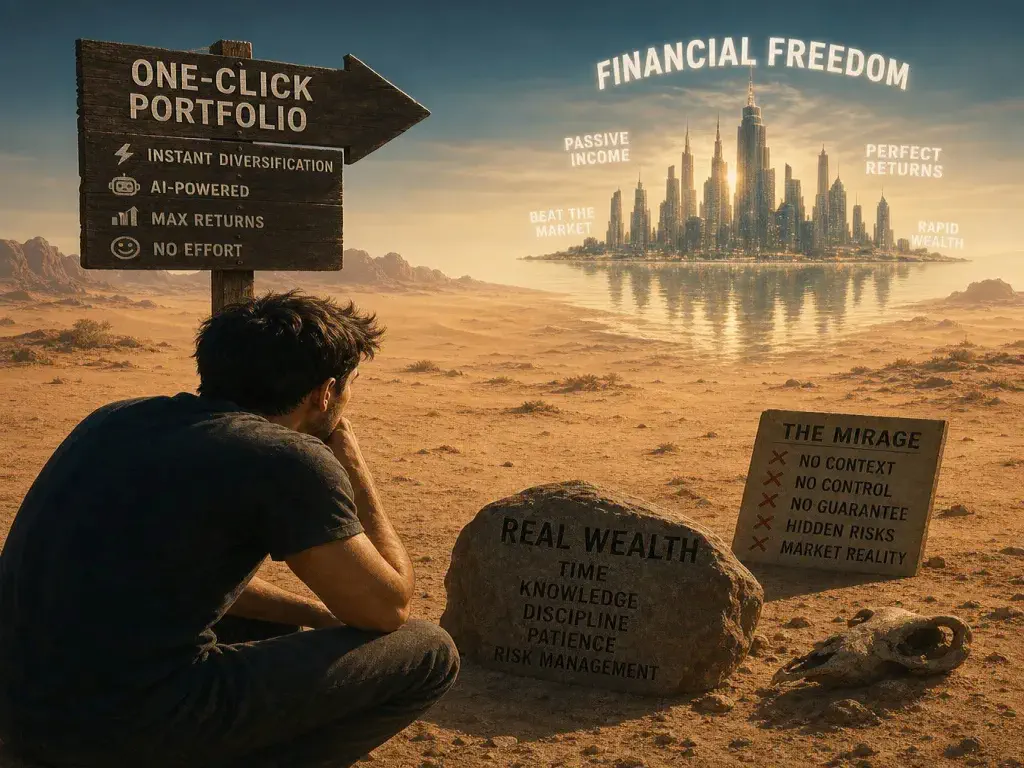
The Mirage of the One-Click Portfolio
It is easy to confuse a polished presentation with professional competence. When you use a generic template or an automated site generator, you are using a tool designed to make thousands of other people look good in the exact same way. The result is a landscape flooded with visual perfection that feels strangely empty—a sea of portfolios that look identical because they lack a personal soul.
For young photographers and designers, relying entirely on these shortcuts creates a dangerous crutch. It allows you to skip the uncomfortable, vital work of discovering your unique voice, mastering your fundamentals, and curating a body of work that reflects your actual perspective.
“In a crowded marketplace, fitting in is a failure. In a busy marketplace, not standing out is the same as being invisible.” — Seth Godin
When you build your identity on quick fixes, you trade long-term authority for short-term convenience. A generated website can give you a digital address, but it cannot give you creative authority. It cannot teach a photographer how to control natural light in an unpredictable environment, nor can it teach a designer how to solve a complex brand architecture problem. The surface may look clean, but true clients—the ones who value vision and pay for excellence—will always look past the wrapping paper to see what lies beneath.
Honesty as Your Greatest Creative Asset
In a creative world full of quick fixes and exaggerated claims, honesty is a radical advantage.
Being an honest creator means presenting your work authentically. It means displaying the projects you actually conceived, shot, or designed, rather than relying on over-polished templates or artificial placeholders. It means having the courage to show your real process, including the iterations, the mistakes, and the breakthroughs that led to the final product.
When you present your work with complete integrity, several powerful things happen:
- You Attract the Right Clients: Authentic work acts as a beacon for businesses that share your values. They hire you for your actual style, not a fabricated persona you can’t sustain.
- You Build Unshakeable Confidence: Knowing that every pixel in your portfolio represents real effort and genuine skill gives you a quiet, enduring confidence during client pitches.
- You Set Realistic Expectations: Honesty eliminates the anxiety of imposter syndrome. You never have to worry about failing to deliver on a promise made by a generic template.
Honesty isn’t just a moral choice; it is the foundation of a distinctive visual signature. When your portfolio honestly reflects your unique taste, personal flaws, and creative instincts, it becomes impossible for an algorithm to replicate.
Cultivating Trust: How to Become the Creator Businesses Depend On
Businesses do not hire graphic designers and photographers simply to buy pretty images. They hire creators to solve problems, tell compelling stories, and elevate their brand in the eyes of their audience. More than anything, they hire people they can trust.
A flash-in-the-pan creator might win a single gig with a slick, automated site, but they rarely secure a second one. Why? Because short-cuts in presentation often correlate with short-cuts in execution. When a project becomes challenging, template-driven workflows crumble.
Real professional success is built on long-term relationships, not one-off transactions. The goal of every ambitious young creative should be to become an indispensable partner—the artist a business calls for every single campaign because they know you deliver with integrity, skill, and genuine passion.
“Trust is the glue of life. It’s the most essential ingredient in effective communication. It’s the foundational principle that holds all relationships.” — Stephen R. Covey
When a brand works with an honest creator, they experience transparency, reliability, and deep engagement. They see a professional who listens to their needs, respects their vision, and puts real thought into every design decision or photo composition. That trust cannot be generated by a web tool; it must be earned through consistent, authentic work.
Beyond the Temporary Fix: Choosing Mastery Over Speed
It is completely natural to want success quickly. We live in a culture that celebrates viral moments and overnight victories. But real artistic development is inherently slow. It demands practice, experimentation, failure, and refinement.
When you choose to rely on template builders as a substitute for real professional growth, you are accepting a temporary fix over true mastery. You might look the part for a moment, but you sacrifice the opportunity to build a career that lasts decades.
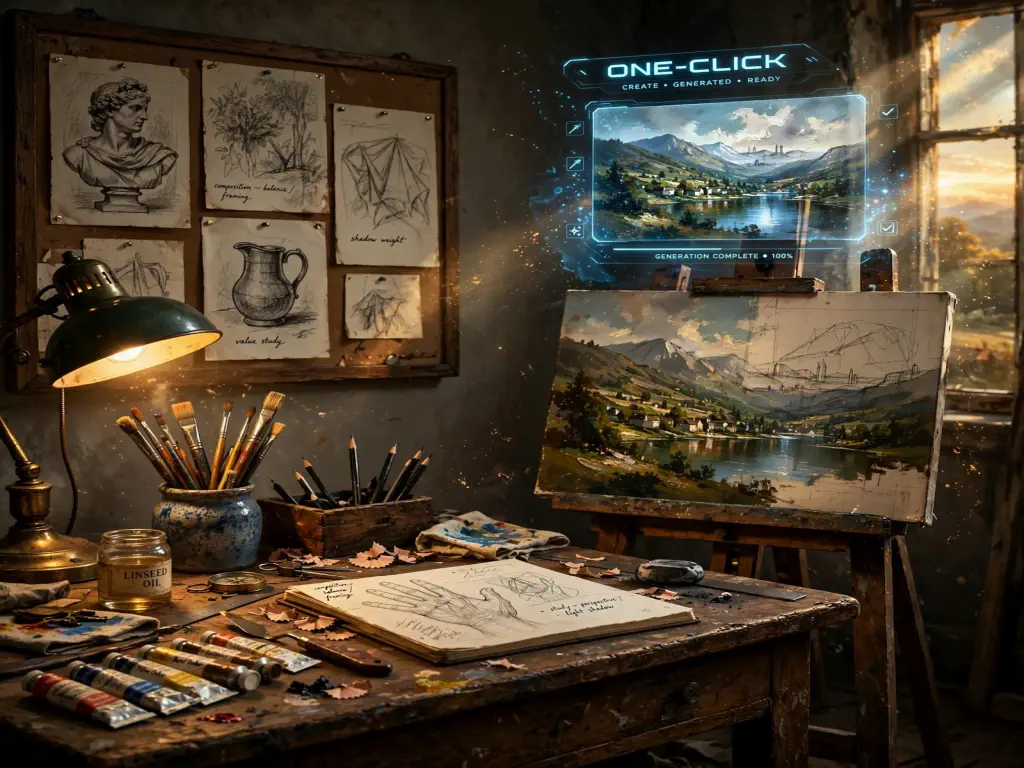
Consider the difference between a quick-fix setup and dedicated artistic growth:
- The Quick Fix: A pre-made website template filled with stock photography and generic layout grids. It takes 20 minutes to launch, but it carries zero artistic identity and offers no foundation for long-term reputation.
- True Mastery: A carefully crafted portfolio—whether built simply or designed from scratch—that showcases real client work, personal passion projects, and a deep understanding of layout, storytelling, and light. It takes time, patience, and effort, but it builds an unshakeable career.
Embrace the slow, beautiful grind of mastering your craft. Spend time studying composition, color theory, typography, lighting, and human psychology. Learn how to speak to clients, how to interpret a brief, and how to deliver value that goes beyond superficial aesthetics. This is the work that turns a talented beginner into an accomplished visionary.
The Path Forward for the Next Generation of Visionaries
To every young photographer holding a camera and every designer staring at a blank screen: do not be afraid of the slow build.
Do not let the pressure for instant perfection convince you to hide behind generic shortcuts. The world does not need another cookie-cutter portfolio generated by a digital factory. The world needs your voice, your perspective, and your real, authentic work.
“To be yourself in a world that is constantly trying to make you something else is the greatest accomplishment.” — Ralph Waldo Emerson
Use tools to help you organize and present your vision, but never let them substitute for the vision itself. Be honest about where you are in your journey, work tirelessly to improve your skills, and treat every client relationship as a partnership built on trust and respect.
When you choose honesty over shortcuts, you stop chasing temporary gigs and start building a lasting legacy. You become more than just someone who operates software—you become a true, accomplished creator whose work speaks for itself, and whose reputation will carry you through a lifetime of creative success.