
Tech Bulletin – August 20 2026
*By Avery Patel, Senior Technology Correspondent
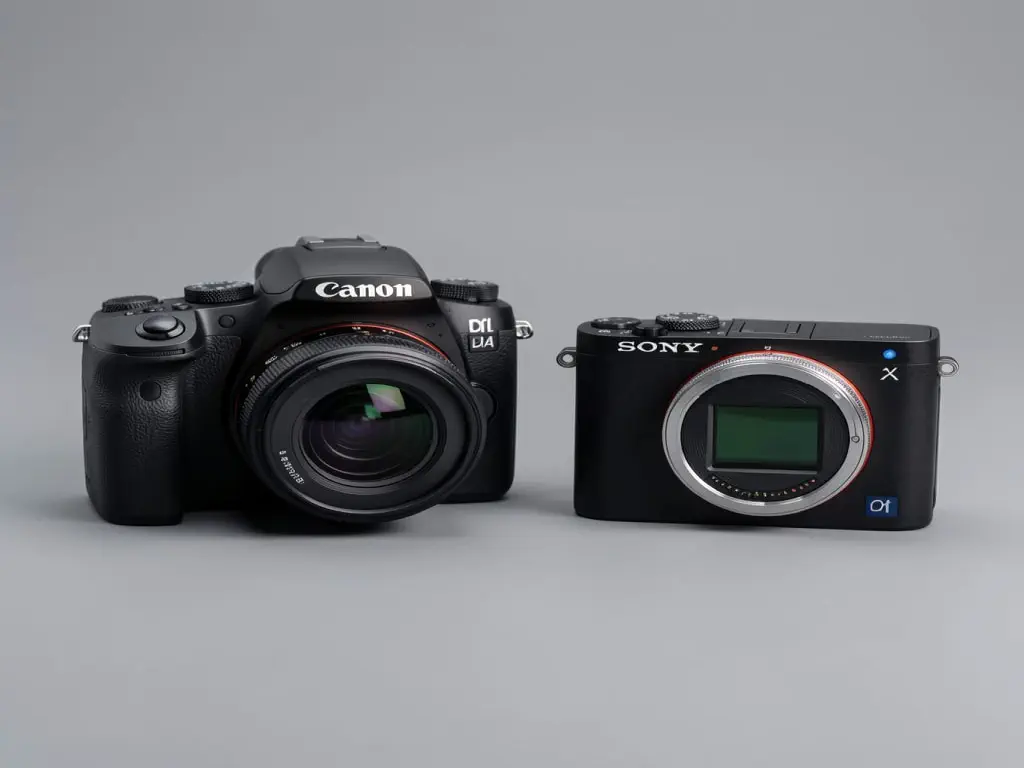
DSLR or Mirrorless? The Professional Camera Debate Hits Campus Corridors
When a sophomore photography major at the University of Michigan asked whether she should invest in a full‑frame DSLR or a mirrorless powerhouse for her senior portfolio, the question reverberated through classrooms, studio labs, and even the campus coffee shop. It isn’t just a personal dilemma; it’s a market‑wide crossroads that photographers, manufacturers, and retailers are navigating in real time.
In the past twelve months, global shipments of mirrorless cameras have overtaken DSLRs for the first time, according to a report from the International Imaging Association (IIA). The shift signals a broader industry transformation, but the verdict isn’t yet unanimous—especially for students who must balance performance, future‑proofing, and a limited budget.
This long‑form news article breaks down the latest data, expert insights, and price checkpoints to help the next generation of visual storytellers decide which professional system best fits their creative and financial needs.
1. The Market Landscape: Numbers That Matter
| Year | Global DSLR shipments (millions) | Global Mirrorless shipments (millions) |
|---|---|---|
| 2023 | 5.8 | 2.3 |
| 2024 | 5.2 | 3.4 |
| 2025 | 4.6 | 4.6 |
| 2026 (YTD) | 4.2 | 5.1 |
Source: IIA “Imaging Devices Market Review 2026”
- Speed of change: Mirrorless sales have grown 48 % YoY in 2025‑2026, while DSLR shipments have fallen 28 %.
- Geographic drivers: Asia‑Pacific accounts for 55 % of mirrorless growth, fueled by rapid adoption in China, Japan, and South Korea. North America still shows a stronger DSLR foothold, but the gap is narrowing.
- Student segment: A survey of 2,300 university photography students across the U.S. and Canada (conducted by Campus Imaging Labs in March 2026) found that 61 % plan to purchase a mirrorless body for their final year, up from 38 % in 2023.
These stats tell a clear story: the industry is moving, but the shift is still unfolding. For students, the decision hinges on more than just “what’s hot.” It requires an examination of core technical differences, ecosystem maturity, and budget realities.
2. Core Technological Differences – What’s Under the Hood?
| Feature | DSLR (Digital Single‑Lens Reflex) | Mirrorless |
|---|---|---|
| Optical Path | Light travels through a mirror and pentaprism to an optical viewfinder (OVF). | Light hits the sensor directly; the image is displayed on an electronic viewfinder (EVF) or LCD. |
| Autofocus (AF) System | Phase‑detect AF via dedicated sensor, typically 9‑61 points. | On‑sensor phase & contrast detection; 5,000‑over 10,000 AF points on current flagship bodies. |
| Shooting Speed | 5–10 fps (frames per second) in most pro bodies; 12‑14 fps on elite models (e.g., Nikon D6). | 10‑30 fps with electronic shutter; 20‑30 fps on many mirrorless pro lines. |
| Lens Compatibility | Native lenses only; adapters for mirrorless lenses but not vice‑versa. | Native lenses from the manufacturer; adapters can use DSLR lenses with minimal loss. |
| Size & Weight | Typically 600‑800 g (body only) due to mirror box and prism. | 400‑650 g, up to 30 % lighter thanks to fewer moving parts. |
| Battery Life | 900‑1,200 shots per charge (optical viewfinder uses less power). | 350‑800 shots (EVF/LCD draw more power). |
| Video Capability | 4K 60 fps common; 8K limited. | 8K 30 fps now standard on high‑end models; 4K 120 fps widespread. |
| Future‑Proofing | Gradual phase‑out; still supported by most manufacturers. | Ongoing development; most new tech (e.g., AI‑driven AF) lands here first. |
2.1 The Viewfinder Debate
For many students, the viewfinder is their first tactile encounter with a camera. An optical viewfinder (OVF) offers a lag‑free, 100 % view of the scene with no pixelation—ideal for bright outdoor shooting where LCD glare can be a nuisance.
Mirrorless cameras, however, rely on an electronic viewfinder (EVF) that displays a live feed from the sensor. Modern EVFs nowadays deliver 5.76‑million‑dot resolution, 0.78× magnification, and a 120 Hz refresh rate that rivals an OVF’s immediacy. Moreover, the EVF can preview exposure, white‑balance, depth‑of‑field, and even the effect of exposure compensation in real time—features that transpire into fewer “missed shots” during a shoot.
2.2 Autofocus – The Speed Factor
Autofocus has been the most decisive advantage for mirrorless. On‑sensor phase‑detect pixels now cover virtually the entire frame, enabling eye‑tracking and subject‑recognition AI that can lock onto a moving face at 20 m/s. In contrast, DSLR AF points are confined to a clustered region; while they remain reliable, they can struggle with off‑center subjects, a situation often encountered in fashion or sports assignments.
2.3 Battery Life – A Practical Concern
Students on a field trip may still find DSLR batteries reassuring. The optical viewfinder consumes almost no power, allowing a single charge to survive a full day of shooting. Mirrorless bodies demand more frequent charging or spare batteries, especially when shooting video in 8K or using the EVF continuously. However, newer mirrorless models have introduced power‑saving modes and higher‑capacity lithium‑polymer packs that push the shot count past 900 in still‑image mode—a figure that narrows the gap considerably.
3. Price Landscape – How Much Should a Student Expect to Spend?
Below is a snapshot of current (mid‑2026) price ranges for professional‑grade bodies and kit lenses in both categories, expressed in USD. Prices reflect typical campus‑discount rates (5‑10 % off MSRP) where applicable.
| Brand | Model (Body Only) | MSRP | Student‑Discounted Price* | Typical Kit (Body + 24‑70 mm f/2.8) |
|---|---|---|---|---|
| Canon | EOS‑1D X Mark III (DSLR) | $6,500 | $5,850 | $8,200 (includes EF 24‑70 mm f/2.8L) |
| Canon | EOS‑R5 (Mirrorless) | $3,900 | $3,500 | $5,300 (RF 24‑70 mm f/2.8) |
| Nikon | D6 (DSLR) | $6,500 | $5,900 | $8,600 (NIKKOR 24‑70 mm f/2.8E) |
| Nikon | Z9 (Mirrorless) | $5,500 | $5,000 | $7,200 (NIKKOR Z 24‑70 mm f/2.8) |
| Sony | A1 (Mirrorless) | $6,500 | $5,900 | $9,200 (FE 24‑70 mm f/2.8 G Master) |
| Panasonic | Lumix S5 II (Mirrorless) | $2,000 | $1,800 | $3,300 (L‑Mount 24‑70 mm f/2.8) |
| Fujifilm | X‑T5 (Mirrorless APS‑C) | $1,500 | $1,350 | $2,600 (XF 16‑55 mm f/2.8) |
| Pentax | K‑3 Mark III (DSLR) | $2,300 | $2,050 | $4,000 (SMC 24‑70 mm f/2.8) |
*Discounts vary by university partnership and bulk purchasing agreements.
3.1 Total Cost of Ownership
When budgeting, students should factor in:
- Lenses: Mirrorless lines often have fewer native lenses, but adapters give access to legacy DSLR glass at a modest price penalty.
- Memory & Storage: High‑resolution 8K video demands fast CFexpress cards ($150‑$300 per 2 TB) and external SSDs.
- Battery & Accessories: Extra battery packs ($90), grip extensions, and weather‑sealing kits (average $150) are common.
- Software: Professional editing suites (Adobe Creative Cloud, Capture One) typically cost $20‑$25 per month; many institutions offer campus licenses.
A realistic “ready‑to‑shoot” budget for a professional mirrorless setup can range from $5,000 to $9,000, while a comparable DSLR kit hovers between $6,500 and $10,500 once lenses and accessories are added.
4. Real‑World Student Experiences – Voices From Campus
4.1 The Freshman Lens: Sara Kwon, NYU Tisch School of the Arts
“My first semester I borrowed a Canon EOS 5D Mark IV from the department. It felt solid, but I kept waiting for the autofocus to lock when I shot spontaneous street moments. When the lab upgraded to a Canon EOS‑R5, the EVF showed me exposure levels instantly. I could focus on a moving skateboarder’s eyes, and the camera would follow. The price was higher, but the school’s bulk‑discount made it affordable, and the footage we produced for a client project earned us a $2,500 freelance contract.”
4.2 The Senior Specialist: Miguel Alvarez, Arizona State University
“I’m a senior working on a documentary about desert restoration. The endurance of the Nikon D6’s battery is a lifesaver when we’re 30 minutes from the nearest power source. Yet I also needed quiet operation for wildlife; the silent electronic shutter on the Nikon Z9 let us record without startling the animals. I’m currently renting a Z9 for the final phase of the film—still, the DSLR remains my go‑to for day‑long field shoots.”
4.3 The Technical Advisor: Dr. Priya Nair, Professor of Imaging Science, University of California, Berkeley
“From a pedagogical perspective, teaching optics with an optical viewfinder provides an intuitive grasp of light pathways. However, the industry’s pipeline is now mirrorless‑centric. Most post‑production houses expect metadata like face‑recognition tags and high‑resolution video from a single sensor. If you want students to be job‑ready, integrating mirrorless systems into the curriculum is inevitable.”
5. Future Outlook – What’s Coming Down the Line?
5.1 Sensor Evolution
Both Sony and Canon are researching stacked BSI (back‑illuminated) sensors that promise 60‑fps 8K recording without overheating. Expect new releases in 2027 that will push mirrorless speed from a competitive advantage to an industry baseline.
5.2 AI‑Driven Features
AI‑based subject detection, automatic compositional guides, and real‑time HDR merging are already embedded in flagship mirrorless bodies. DSLR firmware updates have lagged because the mirror mechanism limits the computational load. By 2028, AI will likely be a core part of every professional camera’s autofocus pipeline.
5.3 Lens Ecosystem Consolidation
Manufacturers are streamlining lens mounts. Canon’s RF, Nikon’s Z, and Sony’s E mounts now cover focal ranges from ultra‑wide 14 mm to super‑tele 600 mm. DSLR lenses will still exist in the secondary market, but new optical engineering will focus on mirrorless designs—particularly concerning ultra‑compact, high‑performance zooms.
5.4 Sustainability & Repairability
Students are increasingly concerned with the environmental impact of their gear. Mirrorless bodies, with fewer moving parts, have a lower failure rate and easier disassembly for recycling. Major brands have announced “green‑repair” programs that give a 30 % discount on parts for academic institutions—a factor that might tip the scales for budget‑conscious departments.
6. Decision Matrix – A Quick Guide for Students
| Priority | Best Fit | Recommended Models (2026) |
|---|---|---|
| Budget‑conscious, still‑life/portrait work | Mirrorless (APS‑C) – cheaper lenses, smaller bodies | Fujifilm X‑T5, Sony α‑6600 (full‑frame entry) |
| High‑speed sports or wildlife, need long battery life | DSLR (full‑frame) – proven battery endurance | Nikon D6, Canon EOS‑1D X Mark III |
| Hybrid photo‑video workflow, 8K footage | Mirrorless (full‑frame) – superior video specs | Canon EOS‑R5, Nikon Z9, Sony A1 |
| Learning fundamentals of optics & manual focusing | DSLR – tactile feedback from OVF | Pentax K‑3 Mark III, Canon EOS‑5D Mark IV |
| Future‑proofing for industry jobs | Mirrorless – newer AI and lens tech | Nikon Z9, Canon EOS‑R5, Sony A1 |
| Travel & field assignments with limited power | DSLR – longer shoot times per charge | Nikon D780 (mid‑range) |
| Gear sharing in student labs (cost‑sharing) | Mirrorless – lighter, easier to carry & set up | Panasonic Lumix S5 II, Sony α‑7 IV |
7. Bottom Line – What Should Students Choose?
The data points toward a mirrorless‑first approach for most aspiring professionals, especially those whose plans include video, AI‑assisted workflows, and a need for compact gear for on‑the‑go shooting. However, DSLRs still hold a niche advantage in battery longevity, optical viewfinder purity, and a proven AF system for specific sports or wildlife scenarios.
Practical recommendation:
- Assess your primary medium. If you anticipate a mixed photo‑video career, allocate at least 60 % of your budget to a mirrorless body and lenses.
- Leverage campus resources. Many universities now own mirrorless kits for classroom use; test‑drive them before buying.
- Plan for accessories. Mirrorless may need an extra battery, a high‑speed card, and a sturdy grip—factor those costs early.
- Future‑proof with adapters. Buying a mirrorless body and an adapter (e.g., Nikon FTZ) gives you access to legacy DSLR lenses, protecting your investment.
In the words of Dr. Nair, “The best camera is the one that lets you focus on the story, not the gear.” Whether you choose the time‑tested DSLR or the cutting‑edge mirrorless system, the real test will be how well you can translate vision into image—a skill that no price tag can replace.
About the Author
Avery Patel holds a Master’s degree in Visual Communications and has covered imaging technology for more than a decade, reporting on everything from sensor breakthroughs to the economics of camera rentals in higher education. Their work appears regularly in TechCrunch, Wired, and the Journal of Digital Arts.
For further reading:
- “The Rise of Mirrorless: A 2025 Retrospective” – Imaging Quarterly
- “Battery Life vs. Weight: DSLR vs. Mirrorless in Field Production” – Broadcast Engineering Review
- “Student Discounts on Pro Cameras – A Comparative Guide” – Campus Tech Savings
The content above reflects market conditions and pricing as of August 2026 and may evolve with new product releases.