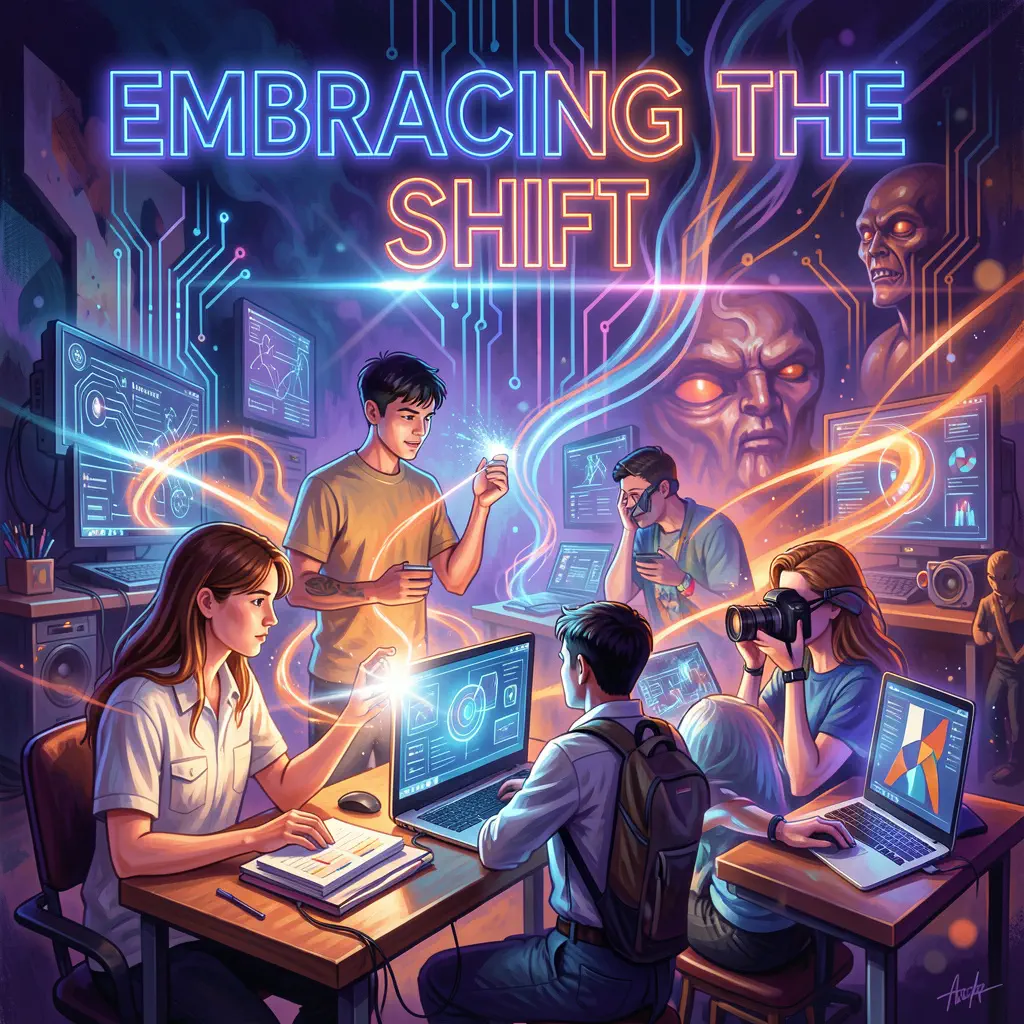
Embracing the Shift: Why Artificial Intelligence is the Ultimate Creative Tool for Young Designers and Photographers
Every generation of visual artists faces a defining technological disruption. For painters, it was the invention of the photographic camera. For traditional darkroom photographers, it was the digital sensor and Adobe Photoshop. Today, as we stand on the precipice of the generative AI era, a similar wave of anxiety is washing over studios and classrooms alike. Young photographers and designers look at algorithms generating hyper-realistic imagery in seconds, and they ask a terrifying question: *Are we rendering ourselves obsolete?*
As a foundation dedicated to funding, mentoring, and elevating emerging creative talent, our perspective is unequivocal: Artificial Intelligence is not your enemy; it is the most powerful collaborative partner your generation will ever know.
However, ignoring the risks or romanticizing total resistance serves no one. To truly harness AI, we must conduct a sober, expert analysis of its genuine advantages and its stark limitations. Only then can we reframe it from a threat to a toolkit.
The AI Landscape: A Double-Edged Sword
To navigate this new frontier, emerging visual artists must understand both sides of the algorithmic coin. The technology democratizes certain technical barriers while simultaneously introducing complex ethical and artistic challenges.
- Rapid Ideation & Moodboarding: Instant generation of concepts to pitch clients.
- Automated Repetitive Tasks: Bulk background removal, masking, and noise reduction.
- Skill Expansion: Photographers learning graphic layouts; designers manipulating light.
- Overcoming Creative Blocks: Breaking through plateaus with unexpected algorithmic variations.
- Homogenization of Style: Over-reliance on generic AI aesthetics.
- Ethical & Copyright Concerns: Unconsented scraping of artist works.
- Devaluation of Craft: Client pushback on timelines and pricing based on “instant” generation.
- Loss of Intent: Delegating the core emotional narrative to a machine.
Deconstructing the Advantages: Speed, Scale, and Synergy
For a young designer trying to build a freelance portfolio or a photographer juggling commercial shoots, time is capital. This is where AI shines brightest. It acts as an elite digital assistant, handling the administrative and mechanical burdens of visual creation.
Consider the traditional workflow of a commercial photographer: scouting locations, scheduling crews, shooting for hours, followed by painstaking culling, tethering, retouching, and color grading. AI tools integrated into software like Lightroom and Photoshop now perform complex masks, frequency separation, and object removals in mere milliseconds. This does not replace the photographer’s eye; it frees the photographer to focus on the human element—directing the subject, capturing raw emotion, and shaping the overarching narrative.
Similarly, for designers, AI excels at the awkward phase between a blank canvas and a finalized brief. Moodboarding, color-palette generation, and rapid layout variations can be executed exponentially faster. Instead of spending three days hunting for stock imagery that never quite fits the vision, a designer can train custom models or generate exact conceptual placeholders to align with a client before the heavy design lifting even begins.
Facing the Disadvantages: Navigating Homogenization and Ethics
To view AI purely through rose-colored glasses is professionally irresponsible. The disadvantages are real, and young creatives must navigate them with vigilance.
The greatest danger to a young artist is not that AI will take their job, but that they will use AI to make themselves interchangeable. If every designer relies on the same three text-to-image prompts, the visual landscape becomes a monotonous echo chamber of slick, soulless gradients and hyper-glossy portraits. Algorithmic outputs lack lived experience, cultural nuance, and accidental brilliance—the very things that make human art resonant.
Furthermore, the ethical landscape of AI training models remains deeply flawed. As creators, we must advocate for transparent, consent-driven technologies. Supporting platforms that compensate original artists and refusing to participate in the exploitation of creative labor is a responsibility the next generation must shoulder.
“The camera did not kill painting; it liberated it from the tyranny of literal representation, giving birth to abstraction, impressionism, and modern design. Artificial intelligence will do the exact same for photography and design. It forces us to ask: What makes human creativity irreplaceable?” — Elena Rostova, Chair of Visual Arts, Foundation Advisory Board
Why AI is a Tool, Not an Enemy
The panic surrounding AI stems from a fundamental misunderstanding of authorship. Art is not merely the final physical output; it is the intentionality behind it. A brush does not paint a masterpiece on its own, and an AI prompt does not possess a worldview.
When we view AI as an enemy, we adopt a defensive posture that stifles innovation. When we view it as a tool—much like the printing press, the vector curve, or the digital SLR—we reclaim our agency. An algorithm can generate pixels, but it cannot:
- Empathize: It does not feel the social tension of a protest, the melancholic beauty of a fading evening, or the corporate struggles of a struggling startup brand.
- Curate with Intent: It can produce a million images, but it lacks the critical eye to select the *one* frame that tells a truthful story.
- Build Client Trust: Clients do not hire software subscriptions; they hire human problem-solvers who can interpret emotion, negotiate nuance, and adapt to unpredictable real-world dynamics.
The Foundation’s Commitment to the Future
At our foundation, we believe the future belongs to the augmented creator—the young photographer or designer who combines deep technical discipline and emotional intelligence with the explosive speed of modern tooling.
We are actively adapting our grant programs, mentorship tracks, and educational resources to support this evolution. We do not fear the tools our scholars use; we champion the brilliance with which they wield them. The canvas has changed, the darkroom is virtual, but the heartbeat of visual storytelling remains unequivocally human.
Do not fight the tide. Learn to surf.